









AI, Automation & Smart Manufacturing: How Packaging Factories Are Changing
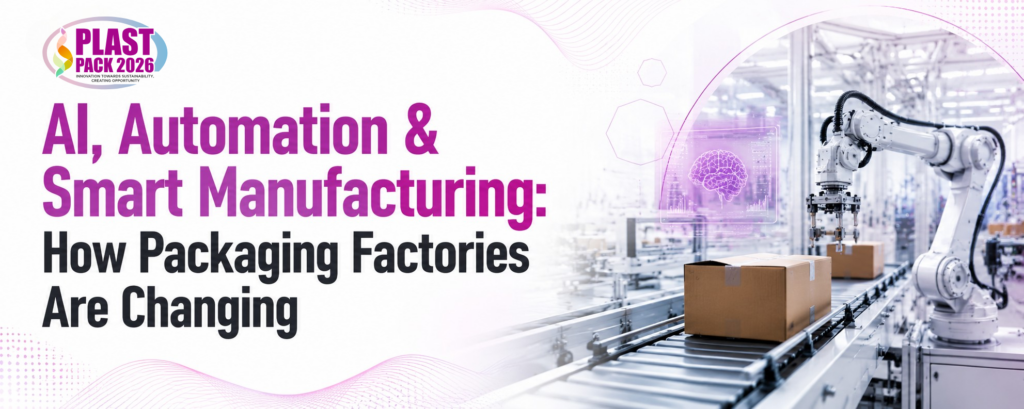
AI, Automation & Smart Manufacturing: How Packaging Factories Are Changing The old packaging factory—characterised by the noise of mechanical presses, hand inspections, and reactive maintenance—is rapidly becoming a thing of the past. Today, top packaging machine manufacturers in India are part of a quiet revolution taking place on the factory floor. The revolution of packaging manufacturing has happened since the introduction of industrial automation – by the convergence of Artificial Intelligence (AI), the Internet of Things (IoT) and advanced robotics. With brands now requesting shorter lead times, perfect aesthetic uniformity, and sustainable waste reduction, smart manufacturing has moved beyond being a futuristic idea and has become an operational baseline. Here’s a deeper dive into how technology is transforming the packaging industry. Inspecting Quality at the Speed of AI Traditionally, quality management in packaging lines was largely dependent on human inspectors or on rudimentary optical sensors. But at today’s line rates–when flexible pouches or labels zip by at hundreds of meters per minute – the human eye can’t keep up. Therefore, the use of AI in plastics manufacturing India has increased at an exponential rate in recent times. Using high-speed cameras and deep learning algorithms, these systems analyse each item in real time. They detect microscopic micro-tears misaligned seals colour variations smeared barcodes Since the AI improves with every image it processes, it can distinguish between a significant structural flaw and a benign surface reflection, thus minimising false positives and ensuring zero-defect shipments. Maintenance: Reactive to Predictive Equipment breakdown is the enemy of factory profitability. Plants traditionally ran on either a reactive model or a preventive maintenance schedule. Thanks to predictive maintenance, smart factories have turned data into a weapon. It’s easy to grasp the techniques if you attend a top-tier packaging industry workshop India. By integrating acoustic, vibration, and thermal sensors into critical components such as bearings, motors, and sealing jaws, AI solutions provide around-the-clock monitoring of machine health. When a part starts to vibrate at an unexpected frequency — which suggests it will wear out — the system flags it automatically. Unparalleled Consistency and Speed One benefit of AI in plastics manufacturing India is that the millionth package off the line has the same structure as the first. Fast robots for pick-and-place, collaborative robots, and automated palletisers process fragile products with speed and gentle touch, preventing damage during handling. This regimented uniformity enables the scale-up of production in modern plants to cater to the hyper-fast demands of e-commerce/quick-commerce buyers. Digital Traceability throughout the Supply Chain Transparency is a must in today’s regulatory environment. Smart packaging machine manufacturers India are now integrating digital traceability into their production lines. Using laser-coded, serialised QR codes, RFID tags, and cloud-based data logging, one can track every packaging batch to its raw material source, the specific machine line it was processed on, and even the package production time. This cycle not only meets stringent pharmaceutical and food laws but also forms a nearly impenetrable shield against worldwide counterfeiting. Final Words The firms pouring money into AI and automation are doing so with vastly higher margins, less labour intensity, and much greater agility. For manufacturers who want to see this industry revolution with their own eyes, events such as PlastPack 2026, organised by the Indian Plast Pack Forum (IPPF), are the best bet. The popular packaging industry workshop India will present live automation solutions, offering the audience a unique opportunity to see the next generation of machinery, AI software, and robotic solutions. All of these will be of paramount importance in smart packaging plants.